Ivan Perez Carrion
For my First Editor In Chief
There are people who pass through our lives like travelers glimpsed from a train window. We remember their faces for a while, then they fade into the distance.
And there are others who become landmarks.
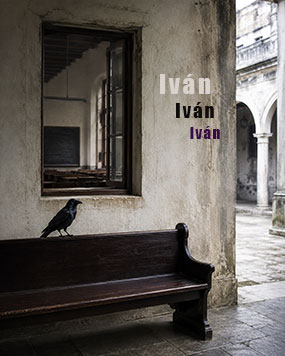
When I think of Iván Pérez Carrión, I do not first remember an editor-in-chief, nor a publisher, nor even a writer. I remember a young man sitting on a dark mahogany bench in a former Jesuit monastery in Havana.
By then, literature had already entered my life through my father. I had devoured hundreds of books and wandered through forests with Hawkeye, sailed beneath the seas with Captain Nemo, traveled to the center of the Earth, and crossed worlds with countless companions made of paper and ink.
Yet readers are not easy to find. True readers are rarer still. Iván was one of them.
We would sit outside the classrooms and speak in English. Around us, students hurried to lessons, examinations, and obligations. Around us, history itself was rearranging Cuba. Yet for a little while none of that mattered.
What mattered was Poe. What mattered was Shakespeare. What mattered was literature.
Iván could recite The Raven with a cadence that made the poem seem alive. He knew Hamlet's great soliloquy by heart. I listened with admiration and perhaps a little envy. How could anyone carry so many words so perfectly within himself?
Years passed, we graduated and life scattered us.
I married, went to university, and entered the long labyrinth that adulthood often becomes.
Then, years later, after I had written my first novel, fate placed Iván before me once again. I arrived at Editorial José Martí carrying my manuscript, and there he was: no longer the young man on the bench but the editor-in-chief.
He accepted my work. Later he returned it. Not because it lacked merit, but because history had changed.
The world that had shaped the manuscript had collapsed. He showed me shelves filled with books that would never be published because the reality they described no longer existed.
Yet what I remember is not disappointment. What I remember is his advice.
"Continue writing."
Not, "This book will succeed."
Not, "This book will fail."
Continue writing.
The years carried us even farther apart. I left Cuba without saying goodbye. Exile leaves little room for farewells. The manuscript remained behind and was recovered only years later. By then it had to be rewritten entirely, because the woman who had written it no longer existed.
I found Iván again through letters and emails. He was living in Santo Domingo. We exchanged news, manuscripts, hopes.
He helped connect me with a publisher. I sent him my books. He promised he would read them. We spoke of the future. His sons were trying to bring him to the United States.
There would be time, we thought. There is always time, we think, until there isn't.
Today, when I think of Iván, I realize that what I miss most is not merely the man.
I miss the conversation. I miss knowing that somewhere there existed another person with whom one could discuss Asimov's vision of humanity, Verne's imagination, Balzac's astonishing ability to inhabit his characters, or Poe's music of language.
Such people are rare. In a lifetime, we may meet only a handful. any of them are gone now.
Alelí.
Marta.
Blanca.
Others remain physically present while illness slowly carries them beyond our reach.
The shelves grow emptier. The circle grows smaller.
Yet when I think of Iván, I do not see a cemetery. I see a bench. Dark mahogany polished by decades of use and a young man reciting Poe from memory, a young woman listening and for a little while, literature making the world larger than the walls around them.
Some friendships are measured in years.
Others are measured in conversations.
Ours was one of those.