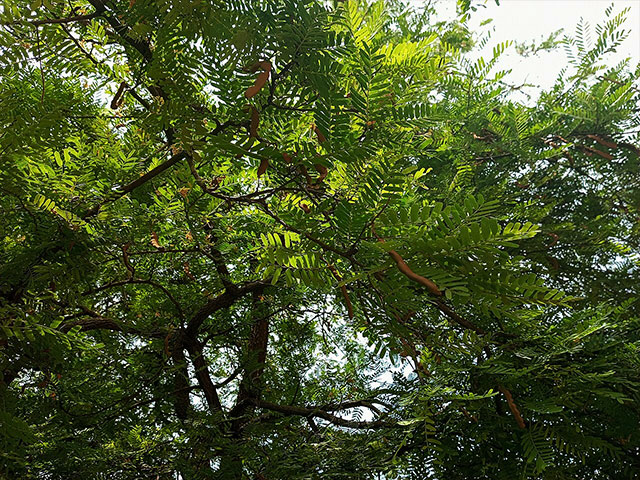
Tamarind Tamarindus indica
Light: Full sun preferred
Water: Moderate, allow slight drying between watering
Soil: Well-draining, prefers slightly sandy soil Balanced fertilizer every 4–6 weeks during active growth Slow, deliberate growth. Sensitive to root disturbance. Adapting to container life—watch drainage carefully.
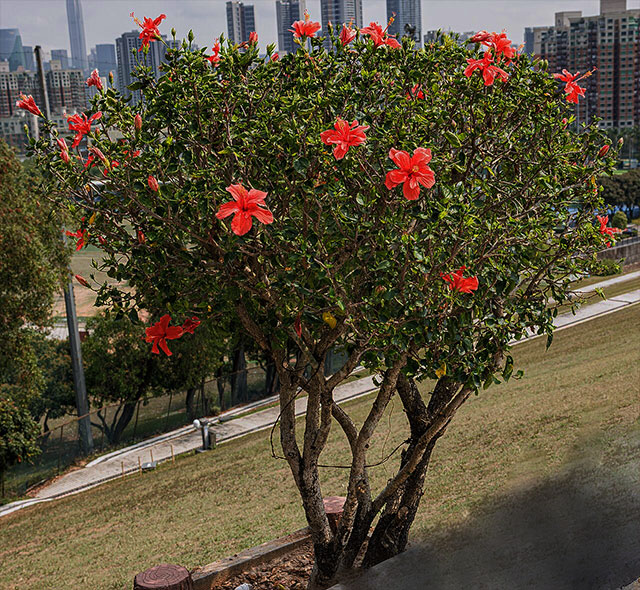
Hibiscus Hibiscus rosa-sinensis
Light: Full sun
Water: Frequent, does not tolerate drying out
Soil: Rich, well-draining High potassium fertilizer every 2–3 weeks High-maintenance but rewarding. Responds quickly to care. Sensitive to stress and environmental changes.
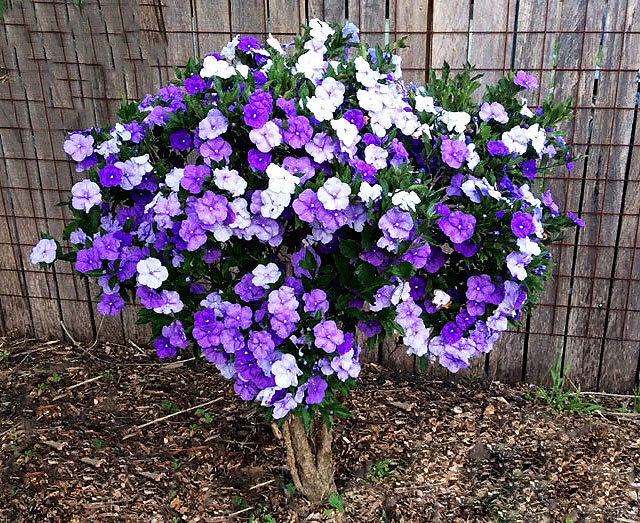
Yesterday, Today and Tomorrow Brunfelsia grandiflora (or B. pauciflora)
Light: Partial shade to filtered sun
Water: Moderate, prefers consistent moisture
Soil: Rich, well-draining Balanced fertilizer monthly Delicate compared to others. Benefits from protection under canopy. Flowering changes color over time.
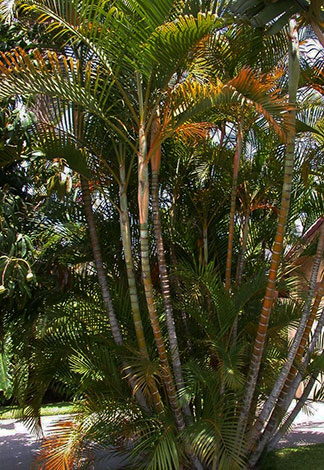
Clumping Areca Palms Dypsis lutescens
Light: Full sun to partial shade
Water: Moderate, prefers consistent moisture
Soil: Well-draining, tolerates sandy soils
Palm fertilizer (high potassium, magnesium)
Every 6–8 weeks in growing season
Primary structural barrier of the terrace.
Provides shade, privacy, and habitat for birds.
Dense growth creates a protected microenvironment.
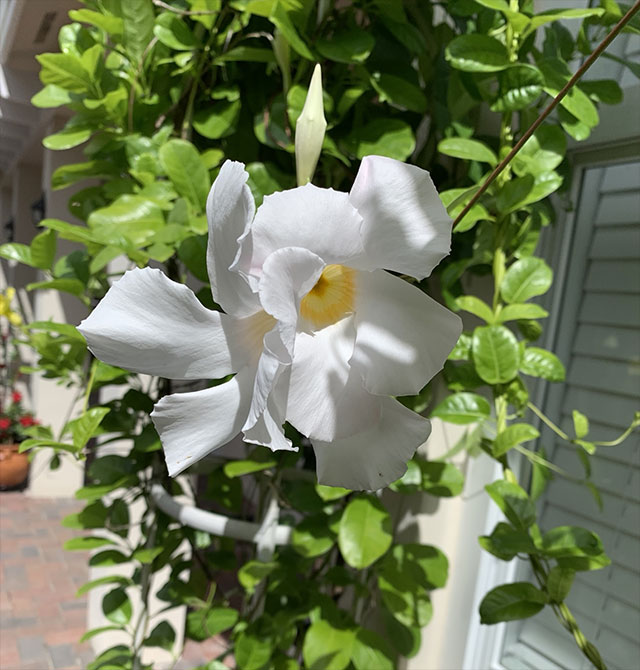
Mandevilla Mandevilla splendens
Light: Full sun
Water: Moderate, do not let fully dry
Soil: Well-draining Bloom fertilizer every 2–3 weeks Climbing plant. Needs support structure. Responds strongly to light and feeding.
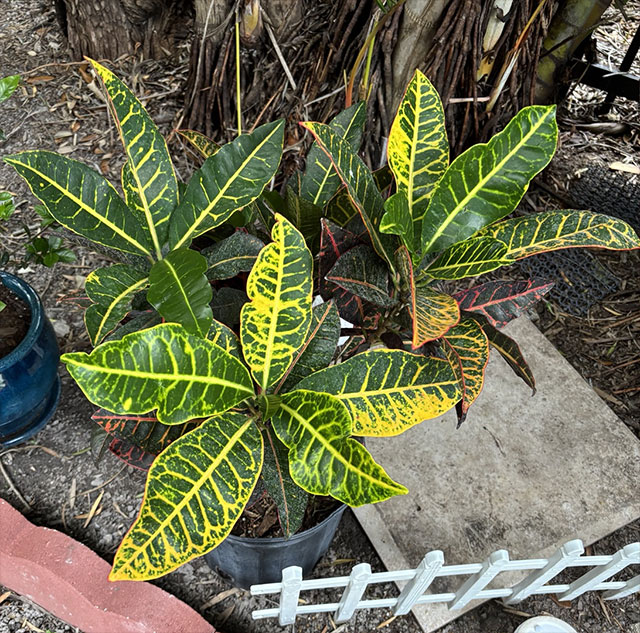
Croton Codiaeum variegatum
Light: Full sun for best color
Water: Moderate, avoid drought
Soil: Well-draining Balanced fertilizer every 4–6 weeks Color depends on light intensity. Sensitive to sudden environmental changes.
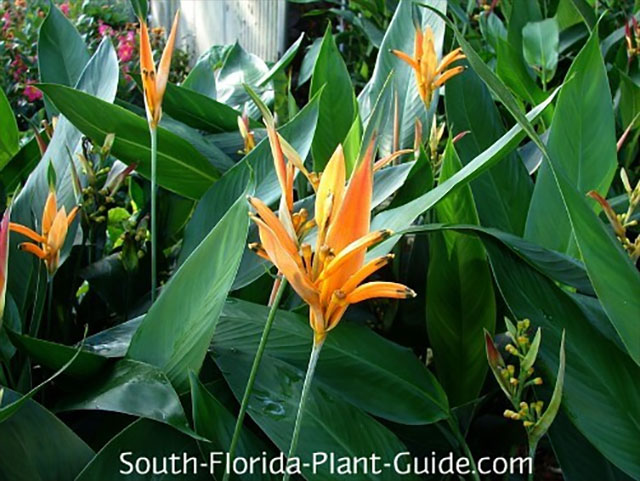
Heliconia Heliconia choconiana
Light: Full sun to partial shade
Water: High, prefers moist soil
Soil: Rich, well-draining Heavy feeder; every 2–4 weeks Tropical presence. Needs water and nutrients. Can become dominant if conditions are favorable.
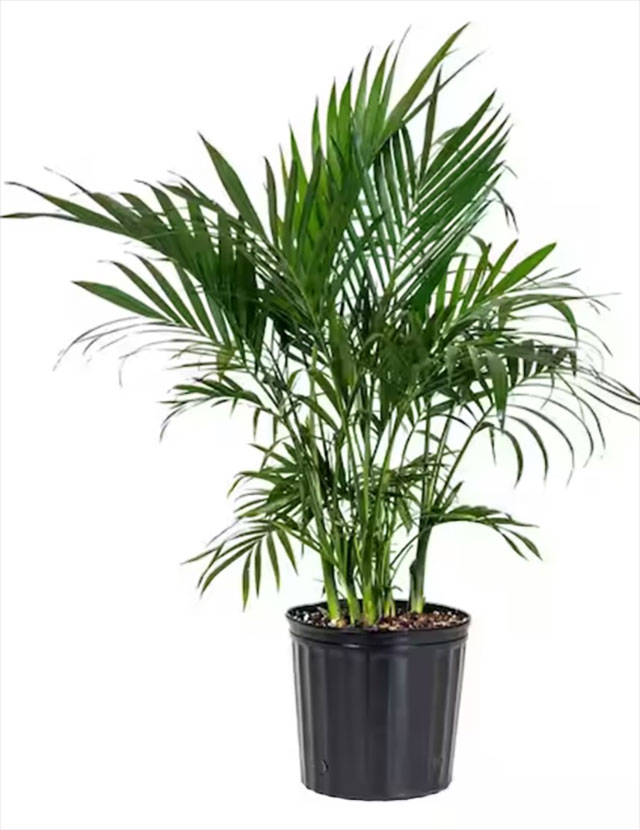
Cat Palms Chamaedorea cataractarum
Light: Partial shade to filtered sun (does not like harsh full sun)
Water: High, prefers consistently moist soil
Soil: Rich, well-draining Balanced palm fertilizer every 4–6 weeks during growing season Clumping palm with dense, low growth habit forming dense understory beneath taller species. Performs best in protected, humid environments. More shade-tolerant than areca palms.
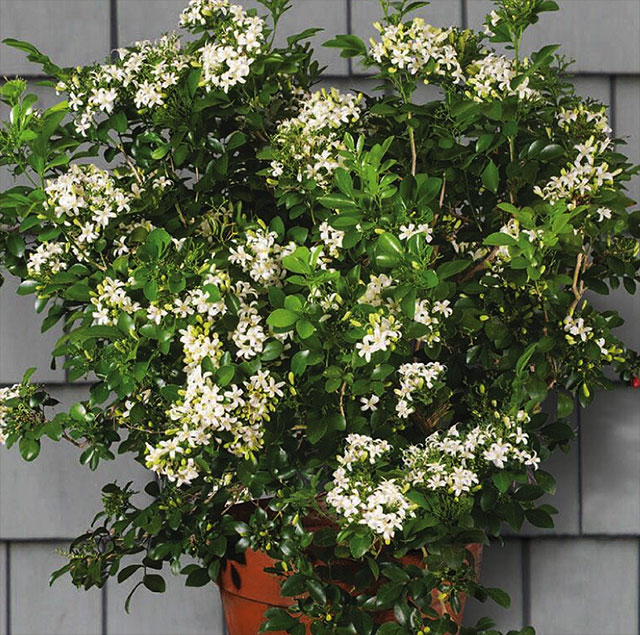
Orange jasmine Murraya paniculata
Light: Full sun to partial shade
Water: Moderate
Soil: Well-draining Balanced fertilizer every 4–6 weeks Fragrant. Can be shaped easily. Good for structure and scent.
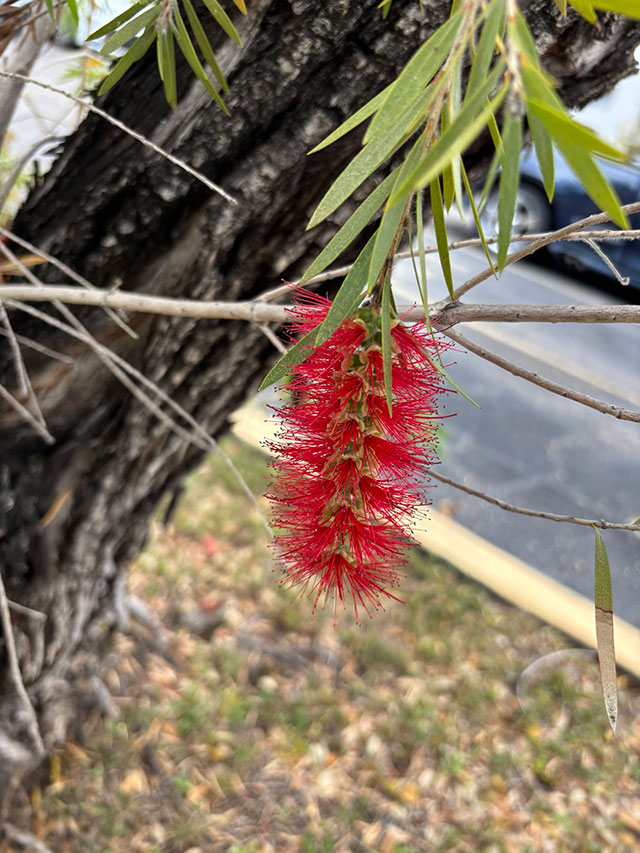
Weeping Bottlebrush tree Callistemon viminalis.
Light: Full sun
Water: Low to moderate, drought tolerant
Soil: Well-draining Light feeding; slow-release Hardy and tolerant. Attracts pollinators. Low maintenance. STATUS: Protected
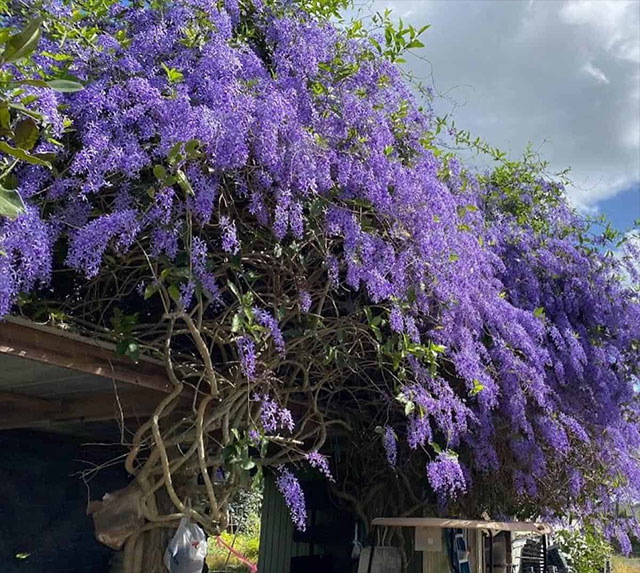
Petrea Vine Petrea volubilis
Light: Full sun
Water: Moderate
Soil: Well-draining Light feeding monthly Climbing vine. Needs support. Flowers dramatically when established.
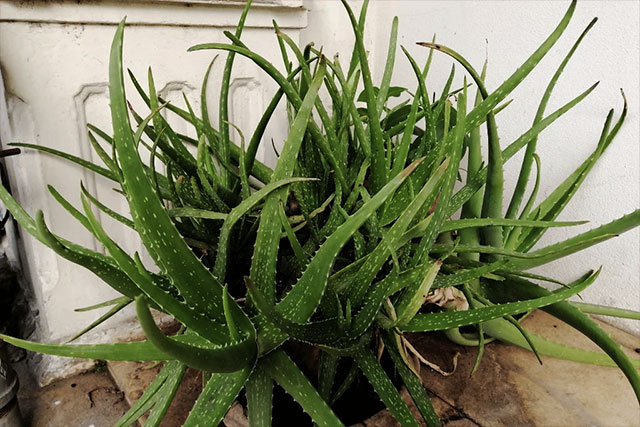
Aloe Aloe vera
Light: Full sun to partial shade
Water: Low; allow soil to dry completely between watering
Soil: Very well-draining; sandy or cactus mix preferred Light feeding; every 2–3 months during active growth Succulent, water-storing plant. Produces offsets (“pups”) readily. Sensitive to overwatering and poor drainage. Performs well in containers; ideal for propagation and low-maintenance setups.
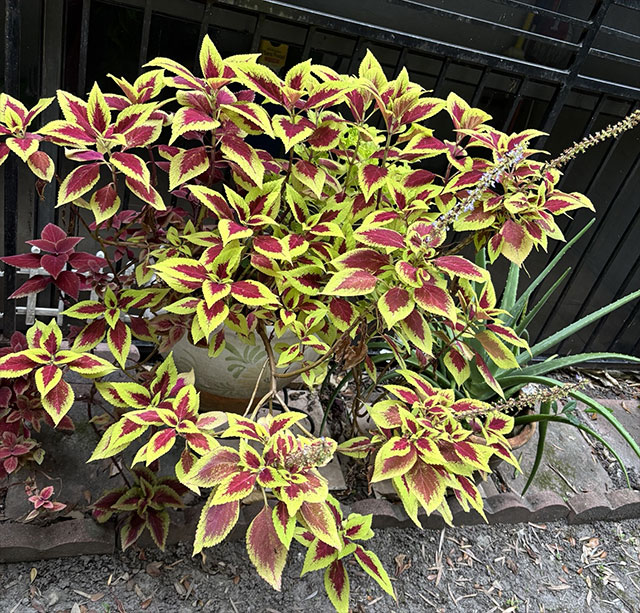
Coleus Coleus scutellarioides
Light:Sensitive to light intensity; placement directly affects pigmentation pattern.
Water:Light feeding every 3–4 weeks (balanced fertilizer) Avoid overfeeding → reduces color intensity Foliage-dominant plant where color replaces flowering function. Best maintained in semi-protected areas within the garden structure.
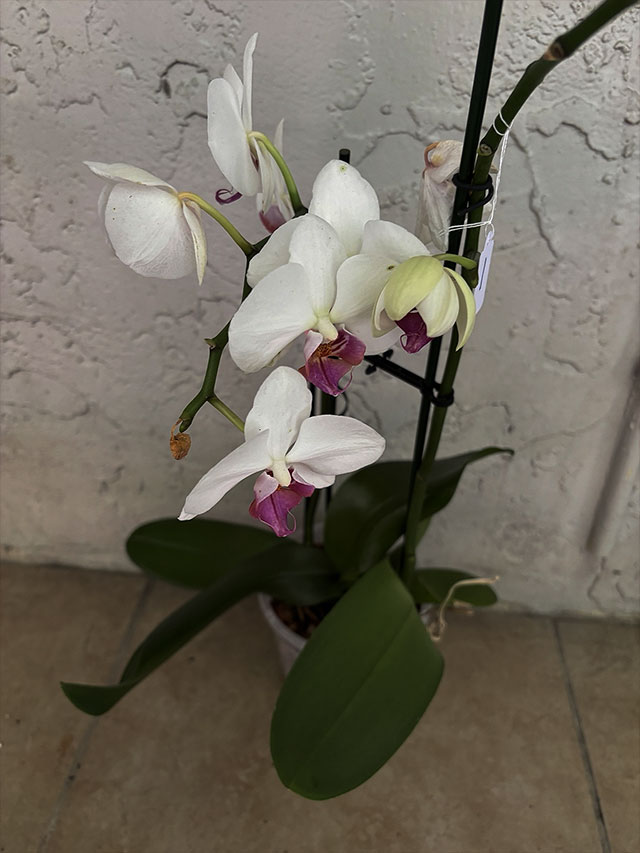
Large Moth Orchid Phalaenopsis spp.
Light:Bright indirect light; warm temperatures (65–85°F); high humidity; excellent airflow; no direct sun
Water:Balanced orchid fertilizer (e.g., 20-20-20) at ¼ strength, every 1–2 weeks Prefers stable conditions; sensitive to overwatering; blooms last several months
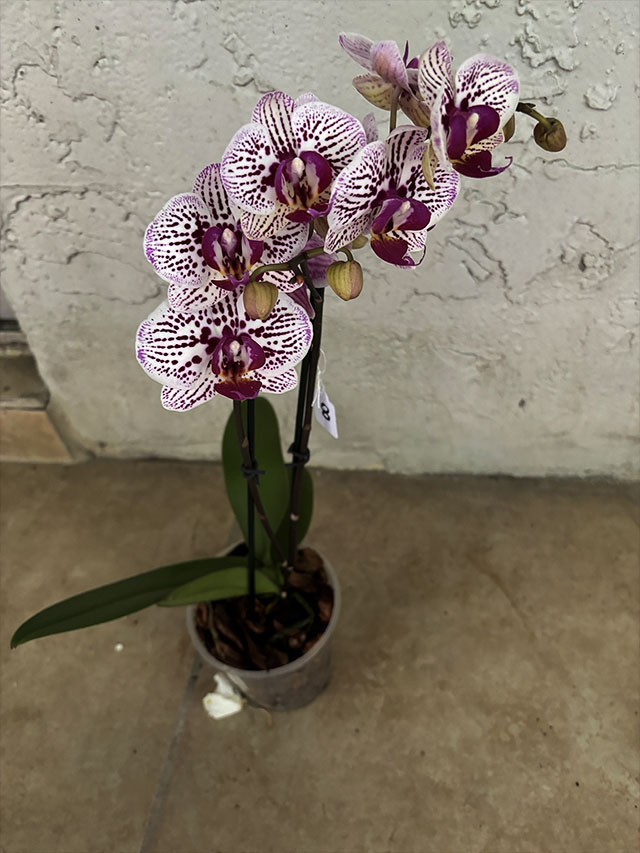
Mini Moth Orchid Phalaenopsis spp.
Light: Bright indirect light; warm; slightly higher humidity; fast-drying medium
Water:Balanced orchid fertilizer at ¼ strength, weekly Smaller root system → dries faster → monitor watering more frequently; frequent bloomers
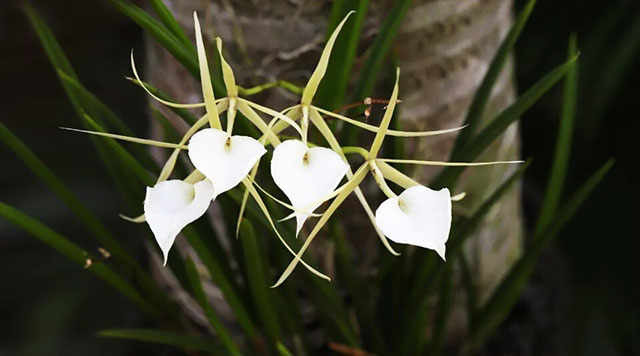
Lady of the Night Orchid Brassavola nodosa
Orchidarium
This Brassavola nodosa is part of my living orchid collection. Readers interested in its cultivation, history, and long-term development are invited to visit the Orchidarium, where each orchid has its own dedicated page.