
Predator supremus - Global system modifier
Homo sapiens presumptor
Nominal apex predator of the planetary system. Rarely engages directly within the terrace habitat, yet exerts disproportionate influence through environmental alteration, introduction of subordinate species, and disruption of natural equilibria. Local behavior frequently characterized by distraction, delegation, or passive observation.

Marauder Orange Cat
Felis aurantius insidiator
This is the orange ambusher, a cat who hides behind the plant pots waiting for unaware birds to come by. Observed patrolling the shaded understory of the terrace habitat, this solitary specimen exhibits advanced ambush behavior—favoring concealment behind ceramic planters and low foliage. Movement is silent, deliberate, and strategic. Presence alone is sufficient to disrupt avian activity. Considered a persistent, uninvited apex visitor of the system.

The Leash Masters
Canis domesticus imperator
Observed in available environments where control is largely symbolic. Individuals exert directional authority through sustained traction forces applied to a human intermediary. Decision-making appears entirely canine-driven. Territorial marking is frequent and deliberate. Vocal assertions vary by size but not by confidence. Collective behavior suggests a distributed command structure with no human oversight.

Heavy command division
Mastiff/ Pit bull
Area dominance, psychological presence
Large-bodied units exert control primarily through mass and stance. Vocalizations are low-frequency but high-impact. Territorial assertions are immediate upon proximity to boundaries—real or imagined.
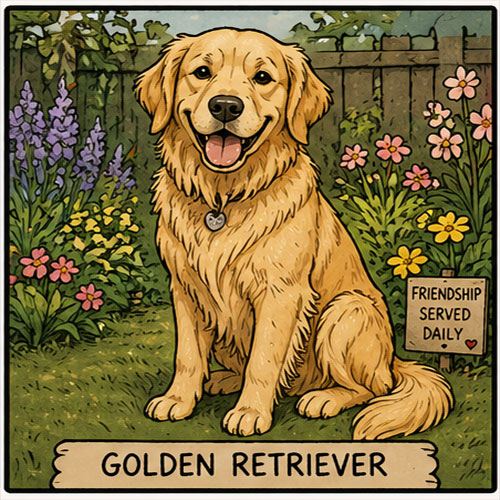
Traction Unit
Golden Retriever
Kinetic Propulsion Specialists
Generates continuous forward force regardless of handler resistance. Movement resembles agricultural plowing behavior. Exhibits high social affinity but low directional compliance. Frequently initiates trajectory changes without consultation.

Acoustic Division
Yorkshire Terrier, Shih Tzu variants
Signal and alert systems
Small-bodied, high-output vocal units. Respond to minimal stimuli with maximal acoustic response. Often operate in pairs or clusters, creating overlapping signal fields. Coordination is nonexistent. Despite their size, these units exhibit a disproportionately high incidence of contact-based defensive behavior, including rapid, localized biting—often exceeding that observed in larger, traditionally classified “dangerous” breeds.
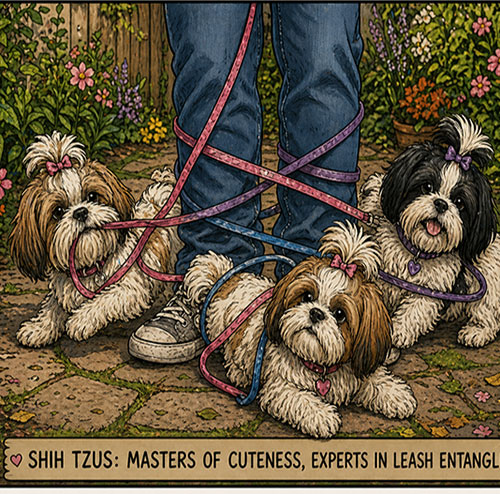
Entanglement Corps
Paired small breeds (especially Shih Tzus)
Multi-vector disruption specialists
Exhibit opposing directional pulls, resulting in rotational dynamics around the human handler. Primary effect is immobilization and loss of structural coherence in the system.
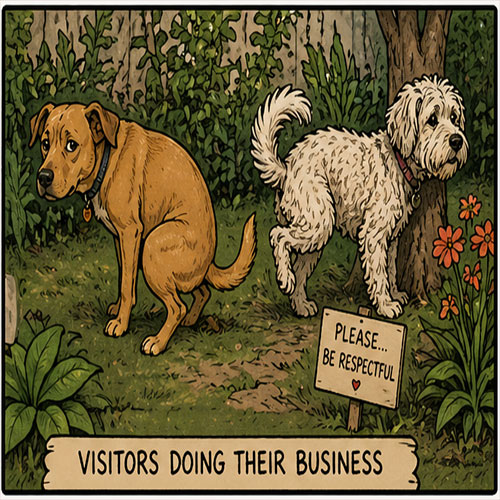
Fertilization Department
All divisions (universal participation)
Environmental modification unit
Implements immediate and non-negotiable substrate marking. Both liquid and solid outputs are deployed without regard for habitat aesthetics or ownership boundaries. Activity appears mission-critical.

Traffic Regulation Authority
Poodle + two small companion breeds (unconfirmed; Shih Tzu–type morphology suspected)
Elevated control and oversight unit
From elevated vantage points, they monitor all activity and issue vocal directives upon detection. Behavior suggests authority over movement within the territory, including pedestrians, canine units, and incidental fauna. Enforcement through sustained acoustic signaling. No physical intervention observed yet.