THE HERMIT WOLF
TRUTH LOGS
THE HERMIT WOLF
TRUTH LOGS
THE HERMIT WOLF
TRUTH LOGS
THE HERMIT WOLF
TRUTH LOGS
March 16, 2026
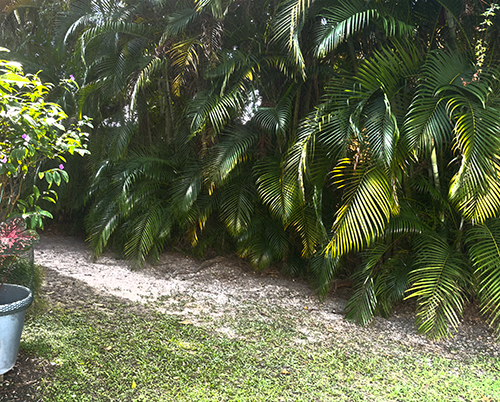
In my neighborhood there is a small war taking place. It is not fought with armies or weapons, and yet the destruction is constant. The victims are the plants, the trees, the living green world that tries to exist around us. Branches disappear overnight. Bushes are cut to stubs. Tree canopies are stripped until nothing remains but a skeleton against the sky.
What makes this war so strange is that it is unnecessary. The plants are not dangerous. They are not invasive. Most of them are simply growing, quietly performing the ancient work of life: converting sunlight into matter, cooling the air, sheltering birds, stabilizing the soil, and reminding us that we are part of the Earth.
And yet they are treated like enemies.
One begins to notice a pattern. Many people seem to prefer a landscape that is sterile: flat grass, trimmed edges, controlled geometry, nothing unexpected. A plant that grows naturally is perceived as a problem. A branch extends too far. A leaf falls on a walkway. A vine climbs where it was not invited. Immediately the reaction is elimination.
This impulse reveals something curious about our culture: a discomfort with organic life when it escapes control.
Nature does not grow according to property lines or aesthetic diagrams. It follows sunlight, water, and its own internal design. And perhaps that freedom unsettles us.
When trees disappear, something else disappears with them. The birds vanish first. In my own small terrace ecosystem I see this clearly. Doves, sparrows, blue jays, grackles—each species depends on branches, leaves, and shade. The trees are not simply decoration; they are architecture for life. Remove the structure and the inhabitants leave.
What remains is silence.

There is also a strange cultural idea that a heavily pruned or barren landscape looks “clean.” But biologically speaking, it is the opposite. A functioning green system regulates temperature, humidity, insects, and soil. It captures carbon and releases oxygen. It stabilizes micro-climates.
Strip away the vegetation and you are left with heat, glare, dust, and lifeless surfaces. What appears orderly is actually ecological impoverishment.
Perhaps the deeper issue is distance. For most of human history people lived directly within ecosystems. They understood trees not as obstacles but as companions—sources of fruit, shade, medicine, and shelter.
Modern urban life has altered that relationship.
Many people now encounter plants only as landscape objects to be controlled by maintenance crews. The living organism disappears from awareness. What remains is a decorative surface.
Against this quiet war there is only one form of resistance available: care. Plant something. Water something. Allow a vine to grow. Protect a tree that offers shade. Leave space for birds and insects.
These small acts restore fragments of the living network that once covered the planet. A terrace garden, a single tree, even a bowl of water for birds—these are not trivial gestures. They are alliances with life.
The green world built the atmosphere we breathe. It stabilized the soil beneath our feet. It created the conditions for animals, and eventually for us. To treat it as disposable is a strange form of amnesia.
Perhaps the real question is not why plants grow everywhere. The real question is why humans have begun to believe that the Earth should exist without them.